
For business teams
Defines how the work should move forward.
Objectives, steps, documents, policies, closing criteria and edge cases all land in a definition the team can review.
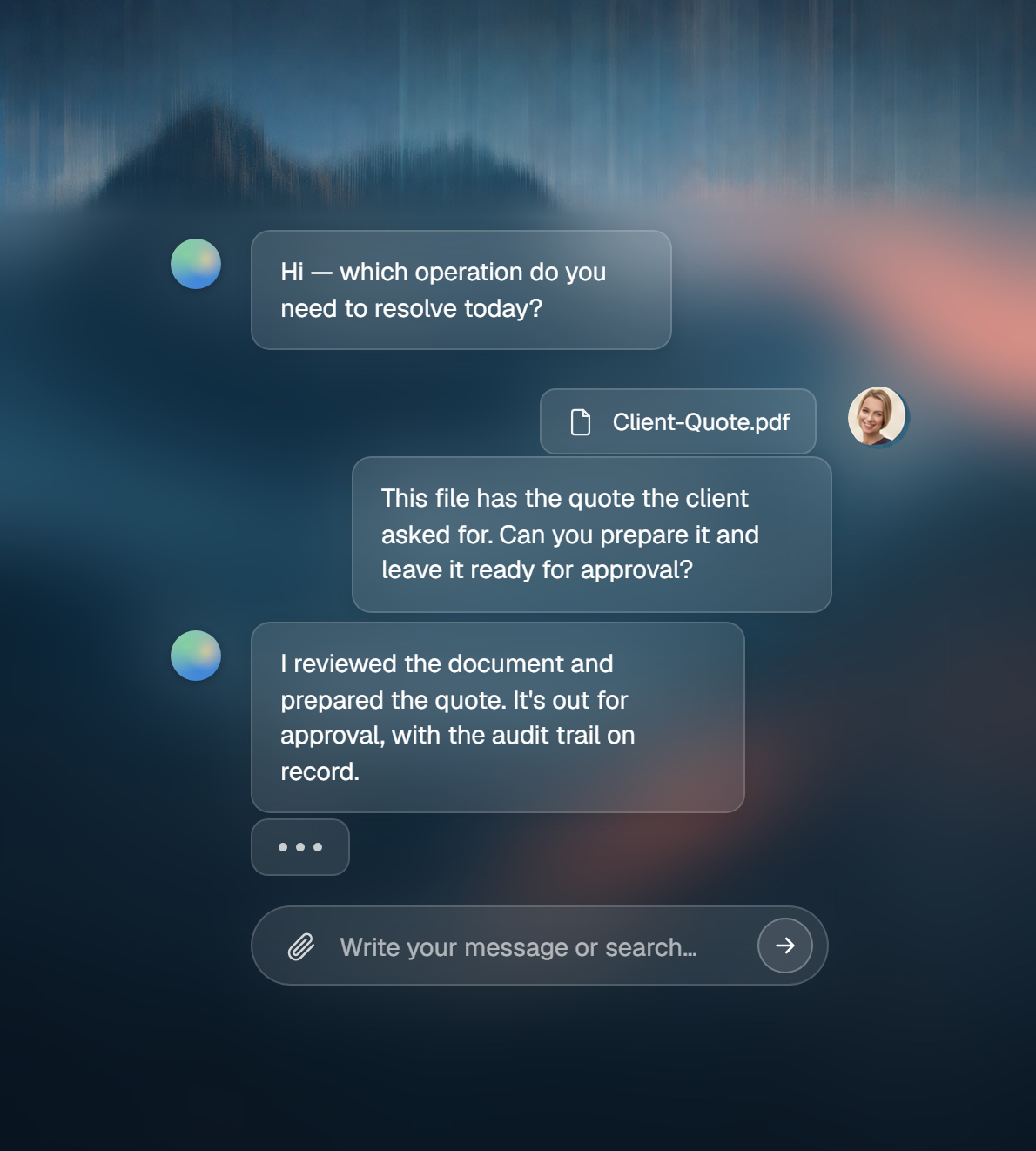

Agent Studio is where the business defines how an operation should move forward and engineering connects the tools, permissions and systems that let it run. SOVRAS brings both layers together, tests them and takes them to production under control.
Procedures, emails, calls, documents, policies, photographs and knowledge bases supply the initial context. The result is not “upload the files and you're done”: it is an operational draft the team can review, correct and govern.
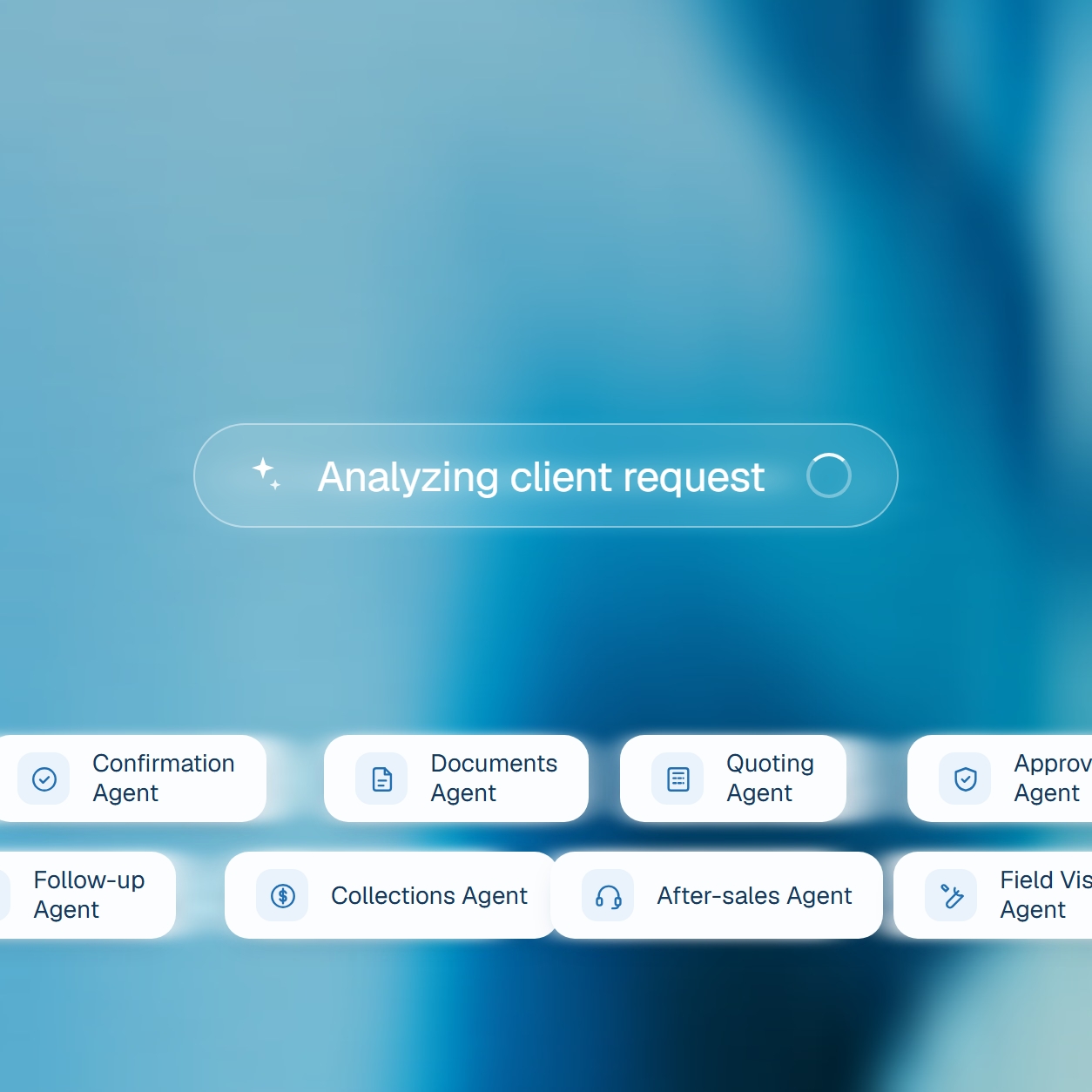
It identifies which information is current, who controls it and when it applies.
Objectives, decisions, tools, exceptions and expected evidence.
The team validates before enabling actions on real systems.
Operations teams define the outcome, the rules and the exceptions in working language. Engineering connects data, permissions, tools and systems to that same definition, without turning it into a black box.
Objectives, steps, documents, policies, closing criteria and edge cases all land in a definition the team can review.
Integrations, schemas, validation, permissions and statuses stay explicit in the implementation.
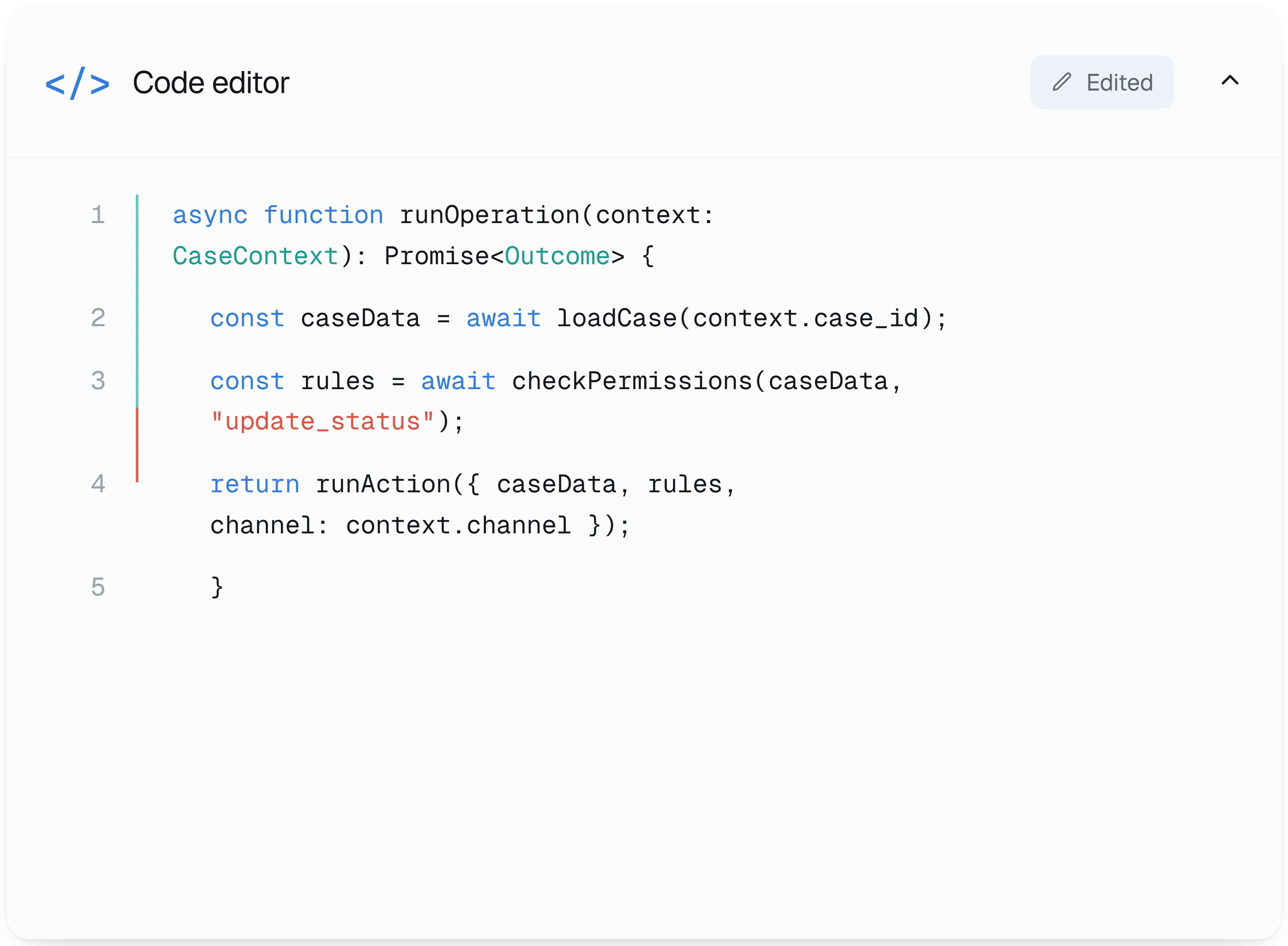
Agent Studio brings together the definition of the work and the technical configuration that makes it executable. Every agent keeps an explicit objective, limited authority and a verifiable way to finish.
Objective, instructions, tone, policies, limits and exceptions.
Authorized capabilities, tools, knowledge and systems.
Approvals, escalation, handoffs with context, and blocked actions.
Versions, deployment configuration and closing criteria.
Turns objectives, rules, tools and limits into an executable definition.
Puts it through scenarios, failures and controls before allowing it to be deployed.
Holds the status of the case and directs agents, tools and people through execution.
Brings together cases, decisions, blocks, evidence and outcomes in production.
Business Graph organizes entities, relationships, owners and sources of truth. Policy defines what each agent may do. Tool Gateway keeps execution on systems inside a controlled boundary.

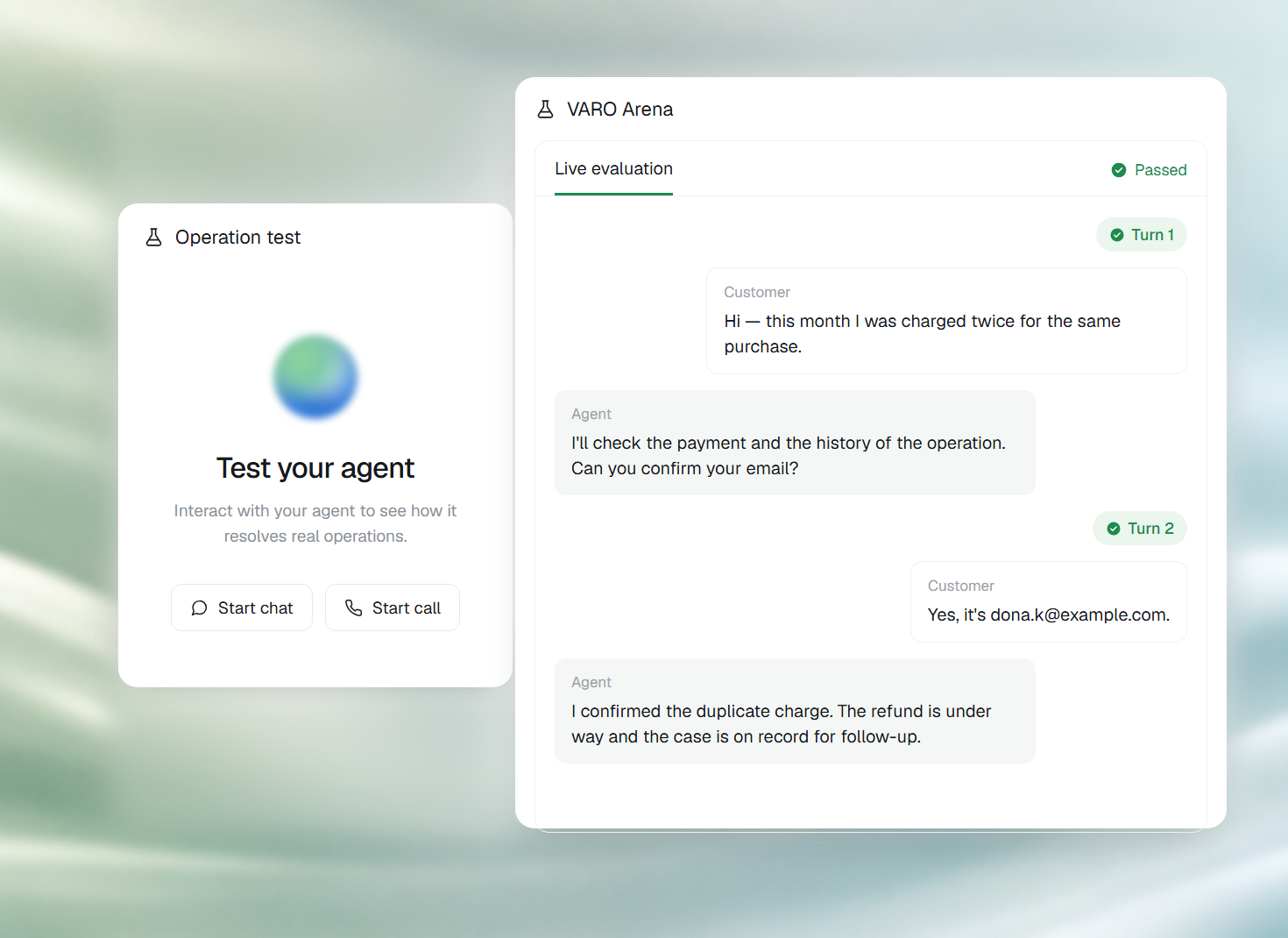
Simulates conversations, documents, policies, tools, failures and edge cases. The team reviews the whole trajectory: what it understood, what it decided, what it tried to execute and whether it reached the expected outcome.
Before productionInteraction simulations, synthetic data, mocked tools, policy tests, failures and release controls.
After productionCase replay, regressions, drift, wrong escalation and false closures feed back into evaluation.
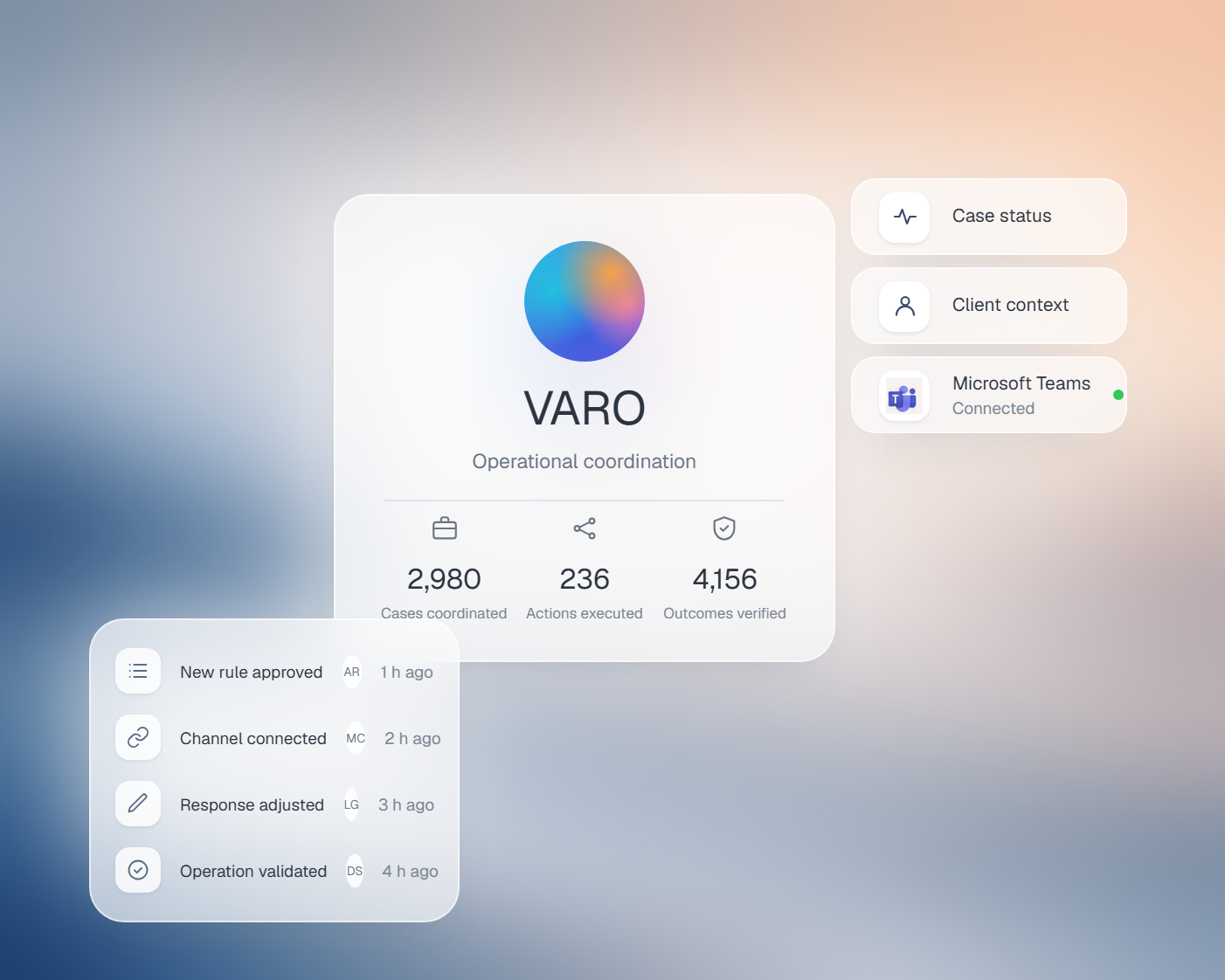
Configuring an agent does not replace the execution platform. It defines how that agent takes part in an operation that holds status, applies policy, controls tools, brings in human review and demands proof of the outcome.
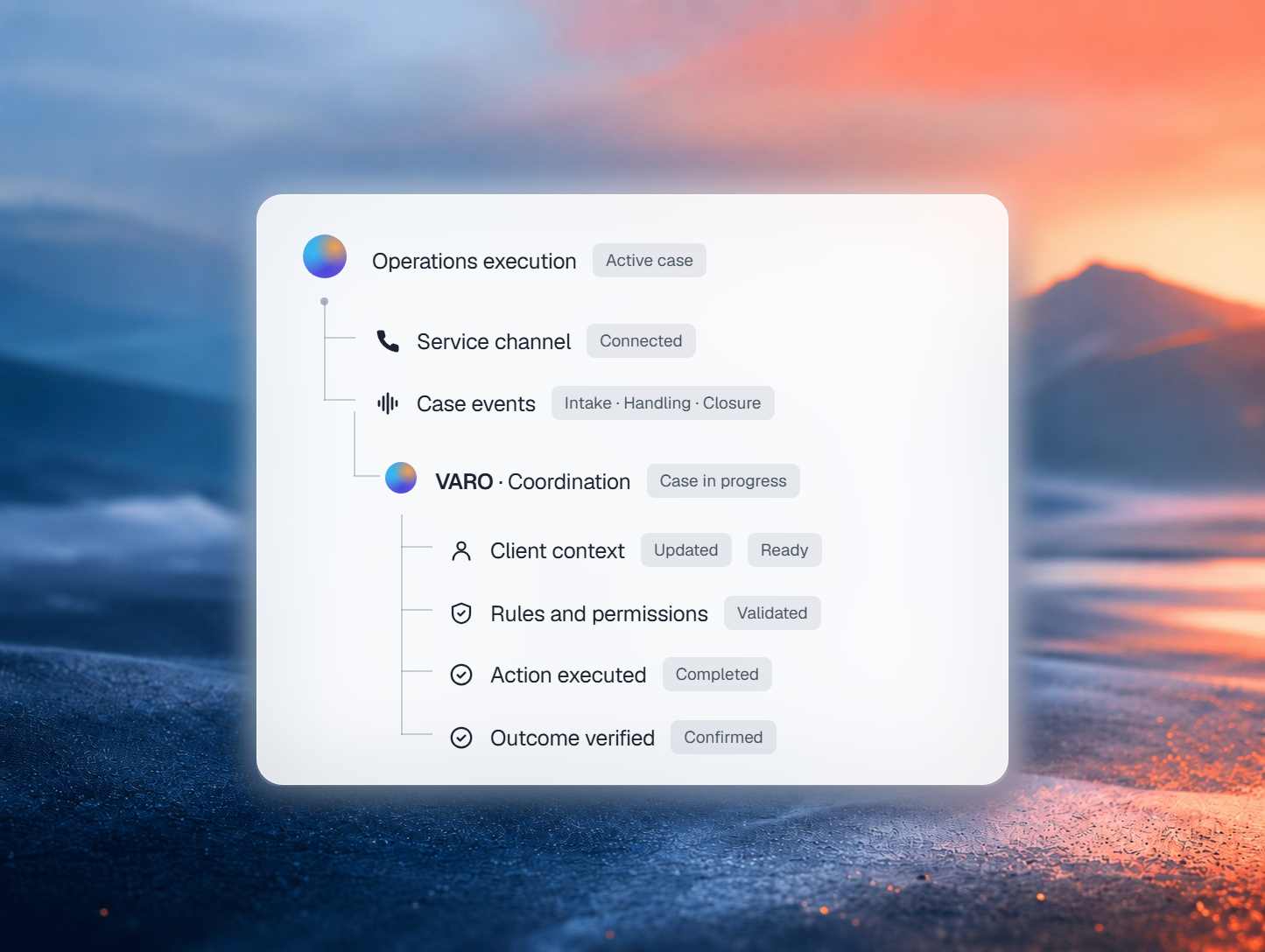
Holds status and coordinates the next action.
Supplies the current business context.
Authorizes and executes within explicit limits.
Steps in when risk, an exception or policy demands it.
Shows what changed and whether the objective was met.
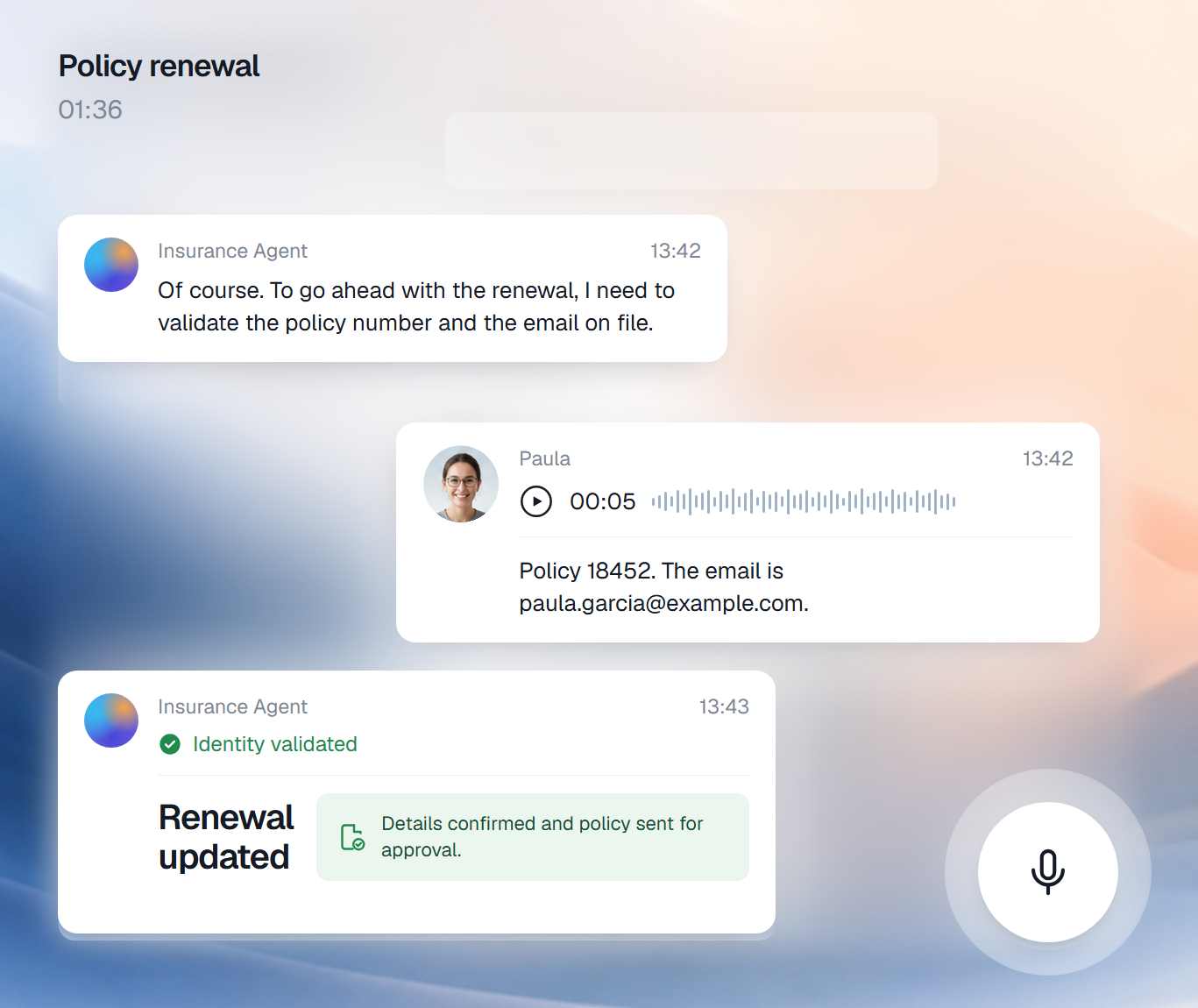
Voice is one possible channel. A call can end while the case stays open: an approval, a change in the system or a piece of evidence may still be pending. SOVRAS holds that continuity until the outcome is verified or the blocker is escalated.
If a renewal has been sent for approval, it is not closed yet. The real status of the case governs the language, the next action and the supervision.
Agent Studio lets business and engineering work on the same operational definition without blurring responsibilities or bypassing production governance.
Separates teams, environments, data and the ability to deploy.
Every change keeps its author, configuration, evaluation and a way back.
Reuses governed capabilities without duplicating integrations or policies.
Promotes between environments and compares versions only after passing its controls.
Defines how it should move forward, which systems it may touch and what evidence it needs in order to close.